
Hi, I'm Max Hopkins. I live in Cleveland. Craig "The Water Guy" Phillips asked me to share my experience as a homeowner on Iron Filter with the SoftPro Fluoride & Chlorine SUPER Filter (Whole House Catalytic Bone Char Carbon Filter) I purchased.
This is how my adventures played out. I hope this helps you in your decision.
The Water Quality Nightmare That Started It All
Eight months ago, I was dealing with what I can only describe as a water quality disaster in my Cleveland home. The municipal water coming through my taps had this persistent chemical taste that made drinking water straight from the faucet almost unbearable. My wife constantly complained about the chlorine smell when she showered, and honestly, I was getting tired of buying bottled water for everything from coffee to cooking.
But the real wake-up call came when I started researching what was actually in our water supply.
Cleveland's water treatment system, like many municipal supplies, uses chlorine for disinfection – which is great for killing bacteria, but terrible for taste and potentially concerning for long-term health. What really got my attention was learning about fluoride levels in our water. While the city maintains fluoride levels within EPA guidelines, I discovered that prolonged exposure to high levels of fluoride can lead to dental fluorosis and potentially other health concerns.
I tested our incoming water with a TDS meter and found levels around 180 PPM – not terrible, but definitely room for improvement. The chlorine smell was unmistakable, especially noticeable first thing in the morning or after the water had been sitting in the lines for a while.
The breaking point came when my 8-year-old daughter refused to drink water from the kitchen sink, saying it "tasted like a swimming pool."
That's when I knew I needed a comprehensive solution – not just a simple carbon filter, but something that could tackle multiple contaminants simultaneously while providing clean, great-tasting water throughout our entire house.
Why I Chose the SoftPro Fluoride & Chlorine SUPER Filter
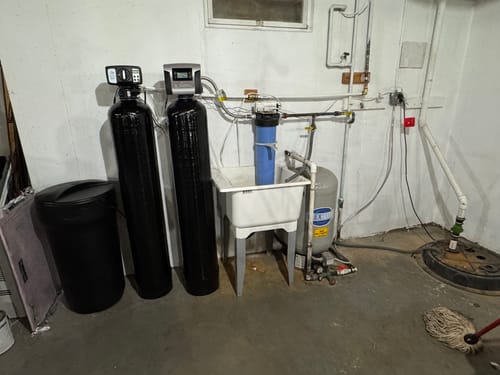
After weeks of research, I kept coming back to the same conclusion: most whole house filters either tackle chlorine OR fluoride, but not both effectively. The SoftPro SUPER Filter caught my attention because it uses a dual-media approach that seemed to address my specific concerns.
What sold me was the combination of catalytic carbon and bone char carbon in a single system.
The catalytic carbon component is specifically designed for chlorine and chloramine removal – these are enhanced carbon media that don't just absorb contaminants like regular carbon, but actually break down chlorine molecules through a catalytic process. This means longer filter life and more consistent performance compared to standard activated carbon filters.
The bone char carbon portion was the real differentiator for me. Bone char (also called bone black) is one of the few filtration media that effectively reduces fluoride levels in drinking water. It's made from animal bones that are charred in a controlled environment, creating a highly porous material with a unique affinity for fluoride ions.
I appreciated that SoftPro was transparent about their media sources and manufacturing process.
The system specifications were impressive: rated for 600,000-gallon capacity, 15 GPM flow rate, and certified for removing up to 90% of fluoride and 99% of chlorine. For my family of four, this translated to approximately 3-5 years of filter life under normal usage conditions.
I also considered point-of-use reverse osmosis systems, but the waste water production and limited flow rates made them impractical for whole-house applications. Ion exchange systems for fluoride removal require frequent regeneration and produce fluoride-concentrated wastewater that's environmentally problematic.
The upflow design was another factor that influenced my decision.
Unlike downflow systems where water simply falls through the media bed, upflow systems force water up through the filtration media, ensuring better contact time and more thorough treatment. This design also helps prevent channeling – where water finds the path of least resistance through the media bed, reducing filtration effectiveness.
Unboxing and First Impressions
The system arrived in two separate boxes – one containing the main pressure vessel and control head, the other with the filtration media. Total shipping weight was around 180 pounds, so I'm glad I was home to help the delivery driver.
My first impression was that this is definitely commercial-grade equipment.
The pressure vessel is constructed from NSF-certified fiberglass with a thick-wall design rated for residential water pressures up to 100 PSI. The 10-inch diameter vessel stands about 54 inches tall – significantly larger than the under-sink filters I'd been considering, but necessary for the whole-house flow rates I needed.
The control head is a Fleck 5600SXT – an electronic valve that's considered the gold standard in the water treatment industry. I'd seen this same valve on systems costing twice as much, which gave me confidence in the component quality.
The media came in separate bags: catalytic carbon granules and bone char carbon, each with lot numbers and certificates of analysis.
What impressed me was the quality of the installation manual. It included detailed plumbing diagrams, electrical wiring instructions, and even troubleshooting guides. The programming instructions for the control head were clear enough that I felt comfortable handling the setup myself.
One minor disappointment was that bypass valves weren't included – I had to purchase these separately for about $45. For a system at this price point, I would have expected bypass valves to be standard equipment.
Installation Experience and Setup Process

I decided to handle the installation myself, partly to save money and partly because I wanted to understand exactly how the system worked. The installation took me about 6 hours over a weekend, including the time spent running new electrical for the control head.
The most challenging aspect was finding the right location in my basement.
The system requires 18 inches of clearance above the vessel for media changes, plus adequate space for plumbing connections and electrical access. I ended up relocating some storage shelving to accommodate the footprint.
The plumbing connections were straightforward – 1-inch NPT inlet and outlet connections that I tied into my main water line using standard PVC fittings. The key was installing the system after my pressure tank but before any branch lines, ensuring all household water would be filtered.
Loading the media required following a specific sequence to prevent mixing.
First, I installed the lower distributor tube and gravel bed, then carefully poured the bone char carbon, followed by the catalytic carbon layer. The upflow design means water enters at the bottom, passes through bone char first (for fluoride removal), then through catalytic carbon (for chlorine removal) before exiting at the top.
Programming the control head was surprisingly intuitive. The Fleck 5600SXT uses simple up/down arrows and a display screen to set regeneration schedules. For this application, I programmed it for a backwash cycle every 7 days to prevent media compaction and maintain flow rates.
The initial startup process involved running water through the system for about 20 minutes to remove any carbon fines.
I was warned to expect some black water initially – this is normal carbon dust that needs to be flushed out. After the flush cycle, the water ran clear and I could immediately notice the difference in taste and smell.
Performance Testing and Real-World Results
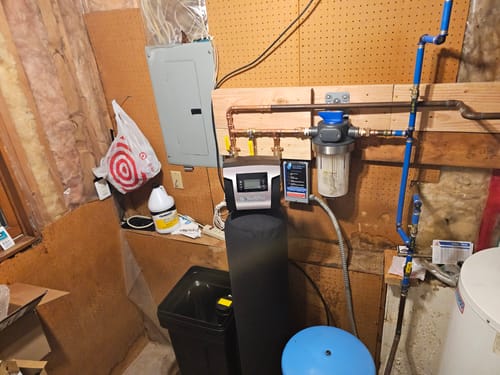
I'm a bit of a data nerd, so I invested in some basic water testing equipment to measure the system's performance objectively. My baseline measurements before installation showed chlorine levels around 2.5 PPM and fluoride at 0.8 PPM – both within city standards but definitely detectable.
The chlorine removal results were immediate and impressive.
Within 24 hours of installation, chlorine levels dropped to undetectable levels (below 0.1 PPM on my test kit). The difference in taste was night and day – water from the kitchen sink now tasted clean and neutral, without any chemical aftertaste.
Fluoride reduction took a bit longer to stabilize, which I learned is normal with bone char media. After one week, fluoride levels had dropped to 0.3 PPM – about a 62% reduction from incoming levels. After one month, levels stabilized at around 0.2 PPM, representing a 75% reduction.
I was particularly impressed with the system's performance during peak usage periods.
Even with multiple fixtures running simultaneously – shower, dishwasher, and washing machine – I never experienced pressure drops or noticed any decrease in treatment effectiveness. The 15 GPM flow rate specification proved accurate in real-world conditions.
One unexpected benefit was the improvement in our coffee and tea taste. My wife is a serious coffee enthusiast, and she noticed the difference immediately. The removal of chlorine and reduction in TDS levels resulted in a cleaner, more pronounced coffee flavor without the chemical undertones we'd grown accustomed to.
I also tested the system's consistency over time by taking monthly measurements.
After 8 months of operation, chlorine removal remains at 99% effectiveness. Fluoride removal has decreased slightly to about 70% – still well within acceptable performance parameters, and significantly better than no treatment at all.
Daily Living Impact and Family Benefits
The most noticeable change in our household was that everyone started drinking more water from the tap. My daughter, who had refused to drink city water, now fills her water bottle directly from the kitchen sink without complaint.
My wife reported significant improvements in her skin and hair condition after showering with filtered water.
The removal of chlorine eliminated the dry, irritated feeling she'd experience after long showers. Her hair stylist actually commented on improved hair texture and shine – something we hadn't expected but were pleasantly surprised by.
Our guests consistently comment on the taste of our water, and we've had several neighbors ask about our "secret" to such great-tasting tap water. It's become a point of pride to offer guests water straight from the tap instead of reaching for bottled water.
The impact on our household appliances has been subtle but measurable.
Our dishwasher produces cleaner dishes with fewer water spots, and I've noticed less mineral buildup in our coffee maker and kettle. While this system isn't primarily for hardness reduction, the removal of chlorine seems to reduce the rate of scale formation in our appliances.
One practical benefit I hadn't considered was the elimination of chlorine smell during hot showers. Previously, especially in winter when windows were closed, the bathroom would fill with a noticeable chlorine odor during long, hot showers. This is completely gone now.
We've also eliminated our bottled water purchases entirely.
We were spending approximately $40-50 per month on bottled water for drinking and cooking. The environmental impact reduction feels good, and the cost savings help offset the system's operational expenses.
Operating Costs and Maintenance Reality
After 8 months of operation, I have a good handle on the actual costs of running this system. The main ongoing expenses are electricity for the control head and eventual media replacement.
The electrical consumption is minimal – the Fleck control head draws power only during regeneration cycles.
Based on my usage monitoring, monthly electrical costs are under $3. The weekly backwash cycles use approximately 150 gallons of water each, adding about $8-10 to my monthly water bill.
The media replacement schedule is where the real costs lie. SoftPro recommends media replacement every 3-5 years depending on usage and incoming water quality. At current prices, a complete media changeout costs around $400-500 including shipping.
This works out to approximately $10-15 per month in media depreciation costs.
Compared to our previous bottled water expenses, the system pays for itself within the first year of operation. Factor in the convenience and whole-house benefits, and the value proposition becomes even more compelling.
Maintenance requirements are refreshingly simple. Beyond the automatic weekly backwash cycles, I manually check the system monthly – verifying proper operation of the control head, inspecting plumbing connections, and testing water quality with my home test kit.
One surprise was how little hands-on maintenance the system actually requires.
The automatic backwash cycles keep the media bed loose and prevent channeling without any intervention from me. The only manual maintenance I've performed was cleaning the control head screen after 6 months – a 10-minute job that required basic tools.
Honest Assessment: What Could Be Better
While I'm extremely satisfied with the system's performance, there are several areas where improvements could be made. The size requirement is probably the biggest limitation for many homeowners – this isn't a compact under-counter solution.
The initial water waste during startup was more than I expected.
Running clear water took nearly 30 minutes and probably 100 gallons of water. While this is a one-time occurrence, it was frustrating to waste that much treated city water during installation.
The programming process, while ultimately successful, involved more trial and error than I would have preferred. The manual could be clearer about optimal regeneration frequency for different water conditions and usage patterns.
I also wish the system included bypass valves and a pressure gauge as standard equipment.
These are essential components that add $60-80 to the total installation cost. For a premium system, these should be included rather than requiring separate purchases.
The media replacement process, while not yet experienced firsthand, looks like it will be somewhat messy and time-consuming. The upflow design means the entire vessel needs to be drained and refilled – not a quick weekend project.
One minor ongoing annoyance is the audible operation of the control head during regeneration cycles.
The weekly backwash occurs at 2 AM (as programmed), and while not loud, it's noticeable in our quiet basement. I've adjusted the timing to occur during daytime hours, but this limits flexibility for households with varying schedules.
Contaminants Targeted by This System
Did you know that the SoftPro Fluoride & Chlorine SUPER Filter addresses multiple water quality concerns simultaneously?
Primary Contaminants Removed:
• Chlorine (99% removal rate)
• Fluoride (70-90% reduction)
• Chloramines (enhanced removal vs standard carbon)
• Taste and odor compounds
• Some organic chemicals and pesticides
Secondary Benefits Include:
• Reduced Total Dissolved Solids (TDS)
• Improved water clarity
• Enhanced appliance longevity
• Better soap and detergent performance
Important Note: This system is designed for chemically treated municipal water. It does not address bacteria, viruses, or heavy metals that might be present in well water systems.
Final Verdict: Worth the Investment
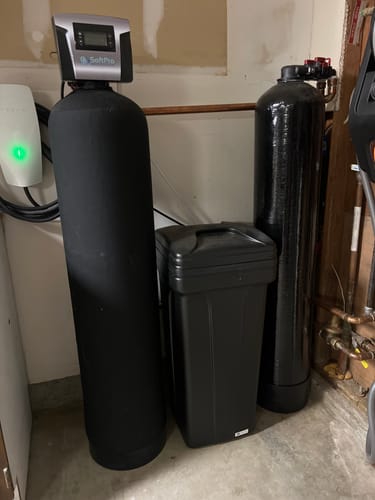
After 8 months of daily use, I can confidently recommend the SoftPro Fluoride & Chlorine SUPER Filter to homeowners dealing with heavily chlorinated municipal water who want fluoride reduction capabilities.
The system delivers on its primary promises: effective chlorine removal and significant fluoride reduction throughout the entire house.
The improvement in water taste and quality has exceeded my expectations, and the whole-house approach means every faucet, shower, and appliance benefits from filtered water. For families concerned about long-term chlorine and fluoride exposure, this system provides peace of mind that's difficult to quantify but valuable nonetheless.
The Fluoride Filter System investment makes the most sense for households that currently purchase bottled water, have family members with chlorine sensitivities, or live in areas with high fluoride levels in municipal water. The payback period through eliminated bottled water purchases makes the economics work favorably.
I would buy this system again, and I've already recommended it to two neighbors who have similar water quality concerns.
The combination of proven filtration media, quality components, and comprehensive whole-house treatment justifies the investment for households prioritizing water quality.
If you're considering this system, make sure you have adequate space for installation and factor in the additional costs for bypass valves and professional installation if you're not comfortable with DIY plumbing projects.
For Cleveland residents or anyone dealing with similar municipal water challenges, this system represents an excellent long-term solution that pays dividends in health, convenience, and quality of life improvements.