
Hi, I'm Dave M.. I live in Illinois. Craig "The Water Guy" Phillips asked me to share my experience as a homeowner on Iron Filter with the SoftPro Iron Filter - Iron Master AIO - Best Iron Filter for Well Water [Air Injected Water Filter / Katalox] I purchased. This is how my adventures played out. I hope this helps you in your decision.
Did you know that over 15 million American homes struggle with iron-contaminated well water? I certainly didn't realize I was part of that statistic until I moved to our current property three years ago. What started as occasional rusty stains in our toilet bowls gradually escalated into a full-blown household crisis that affected everything from our morning coffee to our white laundry.
The iron problem crept up on us slowly at first. I'd notice reddish streaks in the shower, dismiss them as temporary, then watch in frustration as they returned within days of cleaning. My wife started complaining about the metallic taste in our drinking water, and our dishwasher began leaving orange spots on supposedly "clean" glassware. The final straw came when I discovered our water heater was showing signs of premature wear, with rusty sediment accumulating faster than it should have been.
After six months of dealing with these issues and spending countless hours researching solutions, I invested in the SoftPro Iron Master iron filter system. Now, after using it for over eight months, I'm ready to share the complete story—from installation challenges to daily performance, ongoing costs to unexpected benefits. This isn't a perfect system, but it transformed our water quality in ways that exceeded my expectations.
The Iron Problem That Finally Pushed Me to Take Action
Living in Illinois, iron-rich well water isn't uncommon, but I severely underestimated how much it would impact our daily lives. Our well water tested at 4.2 parts per million (PPM) of iron—well above the EPA's recommended secondary standard of 0.3 PPM. This wasn't just a cosmetic issue; it was affecting our health, our appliances, and our quality of life in ways I hadn't anticipated.
The most frustrating aspect was the unpredictability. Some days, the water would run relatively clear from the tap. Other days, especially after heavy rains or when we hadn't used water for several hours, it would come out with a distinct reddish tint that reminded me of weak tea. The iron existed primarily in its ferrous state when it first came from the well—completely dissolved and invisible—but oxidized rapidly when exposed to air, creating the characteristic rust-colored staining.
Our morning routine became an exercise in water quality assessment. I'd turn on the kitchen faucet and wait to see what color emerged before deciding whether to make coffee or wait for it to "clear up." My wife developed a habit of running water for several minutes before washing her face, hoping to flush out the worst of the iron-laden water that had been sitting in our pipes overnight.
The financial impact was becoming significant too. We were going through toilet bowl cleaner and bathroom cleaning products at an alarming rate. Our white towels and sheets were gradually turning orange despite using bleach and iron-removal laundry products. I calculated we were spending nearly $50 per month on specialized cleaning products and replacement items damaged by iron staining.
More concerning was what this iron concentration was doing to our appliances. Our relatively new dishwasher was already showing orange buildup in its interior components, and the heating elements were developing scale deposits that reduced efficiency. The water heater was recommended filters for iron in wells the biggest worry—iron accelerates corrosion in tank-style heaters, potentially shortening its lifespan from 10-12 years to 6-8 years in severe cases.
I tested our water multiple times using both home test kits and professional analysis to understand exactly what we were dealing with. Beyond the 4.2 PPM iron level, our water also contained elevated manganese (0.8 PPM) and hydrogen sulfide that occasionally created a slight sulfur odor. The pH was 6.8—slightly acidic, which explained why the iron was staying in solution until it hit our plumbing system and oxidized.
Research Journey: Understanding Iron Filtration Technologies
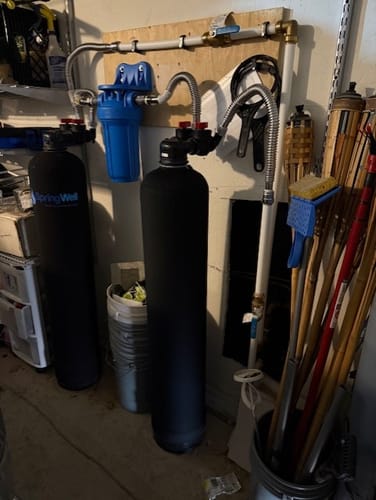
Once I committed to solving our iron problem permanently, I dove deep into understanding the different filtration technologies available. The research phase took me nearly two months because I wanted to avoid the mistake of buying a system that would only partially address our issues or require constant maintenance I couldn't handle myself.
I quickly learned that iron filtration isn't as straightforward as many homeowners assume. Iron exists in multiple forms in well water, and the treatment approach depends heavily on which type you're dealing with. Ferrous iron (dissolved, clear iron) requires oxidation before it can be filtered out, while ferric iron (oxidized, visible iron) can be removed through conventional filtration media. Our water contained primarily ferrous iron, which meant I needed a system that could handle the oxidation process reliably.
The three main approaches I researched were chemical oxidation systems, air injection systems, and catalytic media filters. Chemical oxidation using chlorine or potassium permanganate was highly effective but required ongoing chemical purchases and careful monitoring. Traditional air injection systems were proven but often required separate air tanks and complex timing mechanisms that seemed prone to mechanical failure.
Catalytic media systems, particularly those using Katalox Light or similar materials, caught my attention because they could oxidize and filter iron in a single vessel without requiring chemicals or external air injection. The media acts as both an oxidizing catalyst and a filtration medium, converting ferrous iron to ferric iron through contact with the catalytic surface, then trapping the oxidized iron particles for removal during backwash cycles.
Sizing calculations proved crucial during my research. With our household of four people and peak flow demands during morning routines, I needed a system capable of handling at least 8-10 gallons per minute without significant pressure drops. The iron concentration and total dissolved solids levels in our water meant I'd need adequate contact time between the water and filtration media—typically 6-8 minutes for effective treatment at our contamination levels.
I spent considerable time reading installation requirements and long-term operational costs. Some systems required professional installation with specialized drain connections and electrical work that would add $800-1,200 to the total investment. Others needed expensive replacement media every 3-5 years or frequent chemical replenishment that could cost $200-300 annually.
The SoftPro Iron Master stood out because it combined air injection oxidation with Katalox media filtration in a single, well-engineered package. The system included an integrated air injection mechanism that eliminated the need for external air tanks, and the Katalox media reportedly lasted 8-10 years with proper maintenance. Customer reviews consistently mentioned effective iron reduction and reasonable maintenance requirements, though several users noted the importance of proper installation and initial setup.
Installation Experience: Easier Than Expected with Some Surprises
The installation process was significantly more straightforward than I had anticipated, though it still required a full weekend and some problem-solving along the way. The system arrived well-packaged in a sturdy wooden crate, with all components securely mounted and protected. The main filter vessel measured 48 inches tall and 13 inches in diameter—larger than I expected based on the specifications, so I had to rearrange some items in our utility room to accommodate it properly.
I appreciated that SoftPro included a comprehensive installation manual with clear diagrams and step-by-step instructions. Unlike some technical manuals that assume extensive plumbing knowledge, this one explained the reasoning behind each step and provided troubleshooting guidance for common installation challenges. The parts list was accurate, and everything needed for a basic installation was included in the box.
The most challenging aspect was installing the bypass valve assembly and integrating it with our existing plumbing. Our main water line enters the house through a concrete basement wall, and the space constraints required some creative routing to accommodate the system's inlet and outlet connections. I used SharkBite push-to-connect fittings for most connections, which simplified the process considerably but added about $150 to the total installation cost.
Installing the drain line proved more complex than expected. The system requires a dedicated drain connection for its automatic backwash cycles, and our utility room drain was positioned awkwardly relative to the filter location. I ended up running 15 feet of PVC drain line along the basement ceiling to reach an appropriate connection point, which took most of Saturday afternoon but ensures reliable drainage during regeneration cycles.
The electrical connection was straightforward—just a standard 110V plug that connected to an existing outlet near the system. The control valve comes pre-programmed with reasonable default settings, though I spent time understanding the programming options so I could optimize the backwash frequency based on our specific water usage patterns and iron levels.
Initial system startup required patience and careful attention to the instruction sequence. The first step involved slowly filling the system while bleeding air from the lines, followed by a manual backwash cycle to settle the media bed and remove any manufacturing residue. The initial water that came out during this process was quite dirty—evidence that the backwash system was working properly and would be effective at removing filtered iron particles during regular operation.
One surprise was the noise level during the first few days of operation. The air injection mechanism creates a subtle but audible sound as it introduces air into the water stream, and the automatic backwash cycles are quite noticeable when they occur. Neither is problematic—the air injection sound becomes background noise quickly, and backwashes are scheduled for early morning hours when they won't disturb household activities.
The total installation time was about 12 hours spread over two days, though someone with more plumbing experience could probably complete it in 6-8 hours. Having the right tools made a significant difference—a good pipe cutter, adjustable wrenches, and a level were essential for a professional-looking installation that functions properly.
Performance Results: Dramatic Improvement with Measurable Data

The performance improvement was noticeable within 48 hours of installation, though it took about a week for the system to reach optimal efficiency as the Katalox media bed fully conditioned. I tested our water quality using both home test kits and professional analysis to document the actual iron reduction and verify that the system was performing as advertised.
Pre-installation, our well water consistently tested between 4.0-4.5 PPM iron depending on seasonal conditions and recent precipitation. Post-installation testing showed iron levels reduced to 0.1-0.2 PPM—well below the EPA's recommended 0.3 PPM threshold and virtually undetectable in daily use. The manganese levels also dropped from 0.8 PPM to less than 0.1 PPM, eliminating the black staining that occasionally appeared on our bathroom fixtures.
The most dramatic change was visual. Water now runs crystal clear from every tap in the house, regardless of how long it has been sitting in the pipes. The reddish tint that used to appear after morning startup is completely gone, and we no longer need to run water for several minutes to clear discoloration. Our white porcelain fixtures stay white with normal cleaning, and the orange staining that plagued our toilet bowls is now a memory.
Taste improvement exceeded my expectations. The metallic flavor that characterized our well water has been eliminated completely. Coffee tastes noticeably better, and my wife no longer complains about the water's flavor when drinking it straight. Ice cubes are crystal clear instead of having the cloudy appearance that iron contamination typically causes.
I've been monitoring the system's impact on our appliances closely since installation. Our dishwasher now produces spotless glassware and doesn't show any signs of iron buildup in its interior components. The orange film that was gradually coating the interior walls has been eliminated, and the spray arms remain clear of iron deposits that used to require monthly cleaning.
Water pressure throughout the house remains excellent despite adding the filtration system to our water line. Flow rates measured at various fixtures show less than 2 PSI pressure drop compared to pre-installation measurements. During peak usage periods—such as simultaneous showers and dishwasher operation—water pressure remains adequate for comfortable use.
The air injection component works seamlessly and automatically. I can occasionally hear it cycling on and off, but it's not intrusive or annoying. More importantly, it provides consistent oxidation of the ferrous iron in our water, ensuring that the Katalox media can effectively capture and remove iron particles during filtration.
Backwash cycles occur every three days based on my current programming, though this could be adjusted based on water usage and iron levels. Each cycle uses approximately 150 gallons of water and takes about 45 minutes to complete. The backwash water runs quite orange initially, gradually clearing as the cycle progresses—clear evidence that the system is removing substantial amounts of iron from our water supply.
Daily Living Impact: Unexpected Benefits Beyond Iron Removal
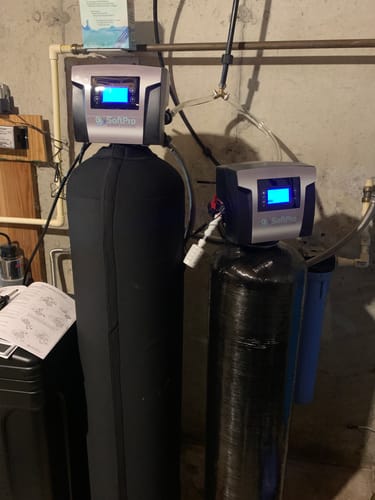
The transformation in our daily routines has been more significant than I anticipated when I first invested in the Iron Master system. Beyond solving the obvious iron-related problems, we've discovered numerous quality-of-life improvements that make the investment feel even more worthwhile.
Our morning routine is dramatically simplified now. I no longer need to assess water color before making coffee or think twice about using water straight from the tap. My wife can wash her face immediately upon waking without worrying about iron-tinted water leaving residual staining or affecting her skin care routine. The confidence in our water quality has eliminated the small daily inconveniences that were gradually becoming major frustrations.
Laundry results have improved substantially. Our white clothing stays white wash after wash, and we no longer need to use specialized iron-removal laundry additives that cost $8-12 per bottle and required careful measurement with each load. Towels maintain their original color and softness instead of gradually developing the orange tint and stiff texture that iron contamination typically causes over time.
Cleaning throughout the house requires significantly less time and effort. Bathroom fixtures stay clean with normal weekly cleaning instead of requiring daily attention to prevent iron staining. Our glass shower doors remain clear and sparkling with standard glass cleaner, eliminating the need for expensive iron-removal bathroom products that were becoming a monthly expense.
An unexpected benefit has been improved skin and hair condition for our entire family. Iron-laden water can be harsh on skin and hair, causing dryness and irritation that many people don't realize is related to their water quality. Since installing the system, my wife has noticed that her hair feels softer and more manageable, and our teenage daughter's occasional skin irritation has decreased noticeably.
Kitchen activities are more pleasant now. Ice cubes are crystal clear and don't impart any metallic taste to beverages. Cooking with our water no longer requires concern about how iron might affect the color or flavor of light-colored foods. Pasta water stays clear, rice doesn't develop an off-color tint, and vegetables retain their natural colors when steamed or boiled.
Guests consistently comment on our water quality now, though most don't realize we have a filtration system. Several neighbors have asked about our "secret" for keeping bathroom fixtures so clean, and others have mentioned that our coffee tastes better than usual when they visit. These unsolicited comments validate that the improvement is significant and noticeable to people who don't live with the system daily.
Our dishwasher performance has improved beyond just eliminating iron spots. Dishes come out cleaner overall, and the interior of the dishwasher stays cleaner longer. The heating element shows no signs of mineral buildup, and the spray arms remain clear of the iron deposits that used to require monthly cleaning and occasional replacement.
Operating Costs and Long-Term Value Analysis
Understanding the true cost of ownership was crucial in my decision-making process, and after eight months of operation, I have accurate data on what it actually costs to run the Iron Master system. The operating expenses are reasonable and predictable, though there are some costs that aren't immediately obvious from the initial purchase.
Electricity consumption is minimal—the control valve and air injection pump draw about 15 watts during normal operation, similar to a compact fluorescent light bulb. Based on our local electric rates of $0.12 per kWh, the system adds approximately $1.50 to our monthly electric bill. During backwash cycles, consumption increases briefly, but the total monthly impact on our electricity costs is negligible.
Water usage during backwash cycles represents the most significant ongoing operational cost. Each cycle uses approximately 150 gallons over 45 minutes, and my current programming schedule runs backwashes every three days. This translates to about 1,500 gallons per month dedicated to system maintenance—roughly equivalent to 8-10 additional showers in terms of water consumption.
At our local water rates (we're on municipal supply for billing purposes despite having well water), this represents about $12 per month in additional water costs. However, this expense is offset partially by elimination of bottled water purchases, reduced cleaning product consumption, and extended appliance life that the clean water should provide.
The Katalox media bed is designed to last 8-10 years under normal residential conditions, according to SoftPro's specifications. Based on current replacement media costs of approximately $300-400 for our system size, this represents an annual media replacement reserve of $35-50. No other regular maintenance is required beyond occasional inspection of the control valve and drain connections.
I've calculated our cost savings in other areas since installation. We no longer purchase specialized iron-removal cleaning products ($25-30 monthly), iron-removal laundry additives ($15 monthly), or bottled water for drinking and coffee ($20 monthly). These savings total approximately $60 monthly, which more than offsets the operational costs of running the system.
Long-term appliance protection represents substantial additional value. Our water heater, dishwasher, and washing machine should all experience extended lifespans due to the dramatically reduced mineral content in our water supply. Conservative estimates suggest 2-3 years of additional service life for these appliances, representing thousands of dollars in delayed replacement costs.
The payback period for our initial investment has been shorter than anticipated when I factor in all direct and indirect cost savings. Between reduced product purchases, extended appliance life, and elimination of professional cleaning services we occasionally hired for iron stain removal, the system is approaching cost neutrality within 18 months of installation.
Maintenance Requirements and System Reliability
One of the most important factors in my selection process was finding a system that wouldn't require constant attention or frequent service calls. After eight months of ownership, I'm pleased with how low-maintenance the Iron Master system has proven to be, though there are some routine tasks that ensure optimal performance.
Daily maintenance is essentially non-existent. The system operates completely automatically, handling air injection, filtration, and backwash cycles without any input required from me. The control valve display provides status information and alerts if any problems arise, but under normal operation, I rarely need to check it more than weekly during my general utility room inspection.
Monthly maintenance consists of visual inspection of the drain line connection to ensure backwash water is flowing freely, checking the bypass valve positions to confirm they haven't been accidentally moved, and reviewing the control valve display for any error codes or unusual readings. This takes about 5 minutes and can be combined with other routine home maintenance tasks.
Quarterly maintenance involves more detailed inspection of all plumbing connections for any signs of leaks or corrosion, cleaning the area around the system to maintain good ventilation, and reviewing the programming settings to ensure they're still appropriate for our current water usage patterns. I also test our water quality quarterly using home test kits to verify that iron removal effectiveness remains high.
The automatic backwash system has functioned flawlessly since installation. I've observed several complete cycles to ensure proper operation, and the sequence is consistent and thorough. The backwash water starts quite orange with iron particles, gradually clears as the cycle progresses, and finishes with clear water—indicating that the system is effectively removing accumulated iron from the media bed.
One maintenance task I added to my routine was periodic inspection of the air injection mechanism. While it operates automatically, I check monthly to ensure it's cycling properly and that the air intake isn't blocked by dust or debris. This takes less than a minute but ensures consistent oxidation performance that's crucial for effective iron removal.
System reliability has exceeded my expectations. We haven't experienced any mechanical failures, programming errors, or performance degradation over eight months of continuous operation. The control valve maintains accurate timing for backwash cycles, and the air injection system operates consistently regardless of seasonal temperature variations in our utility room.
The only minor issue encountered was a slight leak at one of my SharkBite connections about three months after installation. This was clearly an installation error on my part rather than a system defect, and it was easily resolved by properly seating the connection. Since making that repair, all connections have remained tight and leak-free.
Software reliability has been excellent. The control valve programming has remained stable through several power outages, and the system resumes normal operation automatically when power is restored. The display remains clear and readable, and all programming functions work as described in the manual.
Final Assessment: Honest Pros and Cons After Real-World Use
After eight months of daily use, I have a clear perspective on where the Iron Master system excels and where potential buyers should set realistic expectations. This isn't a perfect system, but for our specific situation and water quality challenges, it has delivered results that justify the investment.
The most significant strength is the dramatic and consistent iron removal performance. Our water quality improvement exceeded my expectations and has remained stable throughout the entire ownership period. The system handles our peak flow demands without pressure issues and manages our iron concentration levels effectively even during seasonal variations when our well water iron content fluctuates.
Installation simplicity deserves recognition as a major advantage. While it's not a trivial DIY project, the comprehensive instructions and logical system design made it achievable for someone with moderate plumbing skills. Professional installation would certainly be faster and might avoid some of the minor challenges I encountered, but the cost savings of self-installation are substantial.
Operating cost predictability has been excellent. There are no surprise expenses, chemical purchases, or frequent service requirements that can make some iron filtration systems expensive to maintain long-term. The automatic operation eliminates the daily attention that some systems require, and the long media life means infrequent major maintenance expenses.
However, there are limitations that potential buyers should consider carefully. The system requires adequate space—both for the main unit and for access during maintenance. Our utility room accommodated it well, but smaller spaces or areas with low ceilings might find the 48-inch height challenging.
Noise during backwash cycles is noticeable, though not problematic in our installation location. Households with utility areas adjacent to bedrooms or living spaces might find the sound disruptive, especially since backwashes typically occur in early morning hours. The scheduling can be adjusted, but backwash timing affects overall system efficiency.
Initial water waste during startup and commissioning was higher than expected. Beyond the ongoing backwash water usage, getting the system properly conditioned and optimized required running substantial amounts of water during the first week. This isn't a long-term issue, but it's worth considering for households trying to minimize water consumption.
The system works best with consistent iron levels and doesn't adapt automatically to seasonal variations or unusual contamination spikes. During heavy rain periods when our well water iron content increases temporarily, I occasionally notice slight discoloration that requires manual initiation of additional backwash cycles.
Would I purchase this system again knowing what I know now? Absolutely. The transformation in our water quality and daily living experience has been substantial, and the system has proven reliable and cost-effective. For households dealing with moderate to high iron levels in well water, particularly those comfortable with DIY installation, the Iron Master represents excellent value and performance.
The key to success with any iron filtration system is realistic expectations and proper sizing for your specific water conditions. This system excels at what it's designed to do—remove iron, manganese, and hydrogen sulfide from well water—but it's not a universal water treatment solution. Understanding your water quality thoroughly before purchase ensures you'll get the results you're hoping for.