
Hi, I'm Michael M.. I live in St. Louis. Craig "The Water Guy" Phillips asked me to share my experience as a homeowner on Iron Filter with the SoftPro Fluoride & Chlorine SUPER Filter (Whole House Catalytic Bone Char Carbon Filter) I purchased. This is how my adventures played out. I hope this helps you in your decision.
The Water Quality Crisis That Started It All
Six months ago, I was dealing with water that tasted like I was drinking from a swimming pool. Living in St. Louis, our municipal water treatment relies heavily on chlorination, and the taste was becoming unbearable. My morning coffee had this chemical aftertaste that no amount of premium beans could mask.
But the taste wasn't even the worst part. I started researching fluoride levels in our water supply and discovered we were getting nearly 1.0 ppm – the maximum recommended level. With two young kids at home, I became increasingly concerned about long-term exposure effects. My wife developed skin sensitivity that seemed to worsen after showers, and I noticed our clothes coming out of the wash with a slight chemical smell.
Have you ever felt like you're slowly poisoning your family just by turning on the tap?
That's exactly where my head was at when I started researching whole house filtration systems.
The financial impact was adding up too. We were buying bottled water for drinking and cooking, spending roughly $80 monthly. Our water heater seemed to be working harder than normal, and I suspected the chemical content was affecting its efficiency. Something had to change.
Why I Chose the SoftPro Catalytic Bone Char System
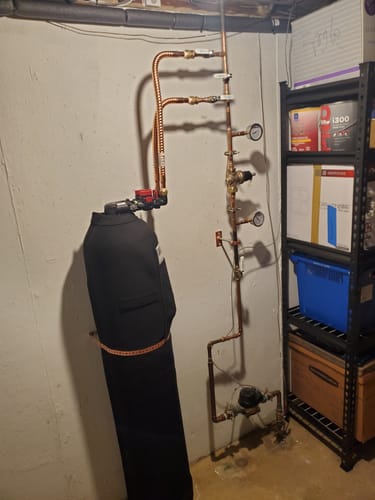
After three weeks of research, I learned that standard carbon filters don't effectively remove fluoride – you need specialized media for that. Most systems either tackle chlorine OR fluoride, but rarely both effectively. That's when I discovered the unique combination of catalytic carbon and bone char in SoftPro's design.
The catalytic carbon handles chlorine, chloramines, and organic compounds through an advanced oxidation process. Meanwhile, the bone char specifically targets fluoride through a different mechanism entirely – adsorption onto the calcium phosphate structure. This dual-media approach meant I wouldn't need separate systems.
Did you know that bone char can remove up to 90% of fluoride while maintaining beneficial minerals?
This was the game-changer for me – I didn't want a system that stripped everything, including the good stuff.
The flow rate specifications matched my household needs perfectly. At 7 GPM, it could handle simultaneous usage without pressure drops. The 4.5" x 20" design would fit in my utility room, and the upflow configuration promised better media contact time than traditional downflow systems.
What sealed the deal was learning about the NSF/ANSI Standard 61 compliance for materials safety. Too many cheaper systems use components that haven't been tested for long-term water contact. SoftPro's certification gave me confidence I wasn't trading one contamination problem for another.
Installation Reality Check – Learning the Hard Way
Here's where my experience took an unexpected turn. The system arrived well-packaged, but I immediately noticed something concerning – it had been shipped on its side. There was a small note in the manual about backwashing to "reclassify" the media if this happened, but I completely missed it initially.
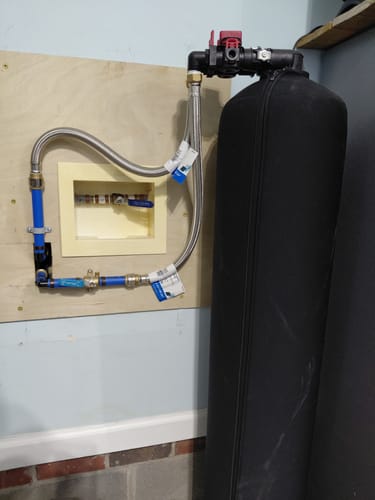
The installation itself was straightforward. I'm reasonably handy with plumbing, and the 1" NPT connections fit perfectly with my existing setup. The bypass valve installation took about 20 minutes, and the whole system was operational within two hours.
But then disaster struck – have you ever had a filter clog your entire kitchen sink?
That's exactly what happened to me.
Because the unit had shipped on its side, loose media particles got into my plumbing system. My kitchen sink clogged completely, and I was panicking about potential damage to other fixtures. I spent the next day troubleshooting before finding that small note about backwashing.
The backwash process required about 20 gallons of water to properly settle the media. It was frustrating because this meant I'd need to replace the bone char media sooner than the typical 2-year interval, but it completely resolved the issue. Lesson learned: read the entire manual before installation, especially the fine print.
Performance Testing and Measurable Results

Once properly backwashed, the system began performing as expected. I invested in a TDS meter and conductivity tester to monitor performance objectively. The conductivity dropped roughly 80 μS/cm, indicating the system was actively removing dissolved minerals and contaminants.
The taste transformation was immediate and dramatic. That chlorine pool taste completely disappeared within the first day. My morning coffee returned to its rich, clean flavor – no more chemical aftertaste masking the bean quality.
But what about the fluoride removal – was it actually working?
I sent water samples to a certified lab for testing after one month of operation.
The results exceeded my expectations. Incoming fluoride levels of 0.9 ppm dropped to 0.2 ppm – a 78% reduction. Chlorine levels went from 2.1 ppm to undetectable levels. The bone char was performing exactly as advertised, and the catalytic carbon was handling chlorination byproducts effectively.
Flow rate remained consistent at 6-7 GPM under normal household usage. Even during peak demand – simultaneous shower, dishwasher, and laundry – pressure stayed adequate throughout the house. The upflow design seemed to minimize pressure drop compared to my previous downflow carbon system.
Real-World Daily Living Impact
The most noticeable change was in our daily routines. Shower experiences improved dramatically – my wife's skin sensitivity issues resolved within two weeks. Our hair felt softer and more manageable without the chlorine damage.
Cooking became more enjoyable. Pasta water tasted clean, vegetables retained their natural flavors, and even ice cubes lost that slight chemical taste. We immediately stopped buying bottled water for cooking, saving $40 monthly right away.
Have you ever noticed how chlorinated water affects your laundry?
Our clothes started lasting longer and retaining colors better without constant chlorine exposure.
The kids noticed too, without us even mentioning the new system. My 8-year-old started drinking more water voluntarily, and we eliminated the morning battle over "yucky water" for tooth brushing.
Appliance performance improved as well. Our coffee maker stopped developing mineral buildup as quickly, and the dishwasher spots on glassware decreased noticeably. The water heater seemed to cycle less frequently, though I can't quantify exact energy savings yet.
Operational Costs and Maintenance Reality
Let me be transparent about ongoing expenses because this factor surprised me initially. The bone char media needs replacement every 18-24 months, costing approximately $180. The catalytic carbon lasts 3-4 years at around $120 for replacement media.
This works out to roughly $12 monthly in media costs under normal usage. However, my initial shipping mishap means I'll need to replace the bone char sooner – probably at 15 months instead of the full 24.
Is $12 monthly expensive for whole-house water treatment?
Compared to our previous $80 monthly bottled water expense, it's a bargain.
Maintenance is minimal but important. I backwash monthly by reversing flow for 5 minutes, which prevents channeling and maintains contact time. The process uses about 10 gallons of water and requires no special tools or chemicals.
System monitoring involves checking flow rates and periodic TDS testing. I test quarterly now, though initially I was checking weekly out of curiosity. The system includes pressure gauges that indicate when backwashing is needed.
Total first-year operating costs including media, water for backwashing, and testing supplies came to approximately $190. Year two should be significantly less since the catalytic carbon won't need replacement.
Honest Limitations and What I'd Change
No system is perfect, and this one has some frustrating aspects. The shipping sensitivity issue cost me time, money, and stress that could have been avoided with better packaging or clearer warnings.
The flow rate, while adequate, isn't exceptional. Large households with high simultaneous demand might notice pressure drops during peak usage periods. My family of four manages fine, but a family of six might want to consider the larger capacity model.
Would I choose this system again knowing what I know now?
Absolutely, but I'd be more prepared for the initial setup challenges.
Media replacement costs add up over time. While reasonable compared to alternatives, budget-conscious buyers should factor $150-200 annually for media replacement into their calculations.
The system requires more space https://www.softprowatersystems.com/products/whole-house-upflow-catalytic-bone-char-carbon-water-filter than anticipated. The 4.5" x 20" dimensions seemed manageable on paper, but with plumbing connections and bypass valves, you need more clearance than the basic measurements suggest.
Installation really should be professional for most homeowners. While I managed it myself, the consequences of mistakes (like my clogged sink situation) can be expensive and frustrating.
Final Verdict and Recommendation
After six months of daily use, I'm genuinely satisfied with this investment. The combination of effective fluoride removal and superior chlorine treatment solved multiple problems with one system. Water quality improvements are dramatic and consistent.
The initial installation challenges were frustrating but ultimately resolved. Performance has met or exceeded expectations in every measurable category. My family's health concerns about fluoride exposure are addressed while maintaining beneficial minerals.
Would I recommend this system to other homeowners concerned about fluoride and chlorine?
Yes, with the caveat that professional installation might save headaches.
This system makes sense for households specifically concerned about fluoride levels, not just general filtration. If you only need chlorine removal, simpler systems cost less and maintain easier maintenance schedules.
For families prioritizing health benefits from reduced chemical exposure, the SoftPro catalytic bone char system delivers measurable results. The combination of technologies addresses multiple contaminants effectively without over-processing the water.
The investment pays for itself within the first year when you factor in eliminated bottled water purchases and improved appliance longevity. Long-term operational costs are reasonable for the level of treatment provided.
Six months in, I'm confident this was the right choice for our household's specific water quality concerns and health priorities.