
Hi, I'm Nicholas K.. I live in St. Louis.
Craig "The Water Guy" Phillips asked me to share my homeowner experience with local tap water from the city and the SoftPro ECO™ City Water Softener - Best Water Softener Systems for City Water I purchased.
This is how my adventures played out. I hope this helps you in your decision.
Did you know that most city water contains dissolved minerals that can wreak havoc on your home's plumbing and appliances?
I discovered this the hard way when my expensive coffee maker started producing bitter-tasting coffee and my glassware developed those stubborn white spots that seemed impossible to remove. Living in St. Louis, I thought our municipal water was fine – after all, it's treated and safe to drink, right?
But after six months of owning the SoftPro ECO best water softener water softener, I can honestly say it's transformed our household water quality in ways I never expected. The quick installation, bulletproof construction, and immediate improvements convinced me this was money well spent – especially at less than a third of what local water companies quoted me.
Let me walk you through my complete experience, from the initial water problems that drove me to research solutions, through the installation process, and into the real-world performance I've observed over months of daily use.
The Hard Water Reality That Drove Me to Find a Solution
Before I dive into my experience with the SoftPro ECO, let me paint you a picture of what life was like with untreated city water in our St. Louis home.
The problems started subtly. My wife noticed her hair felt different after washing – not exactly dirty, but lacking that soft, silky feeling she remembered from when we lived in areas with naturally softer water. Then came the laundry issues. Our white clothes gradually took on a grayish tinge, and fabric softener seemed to have little effect on the stiffness of our towels and sheets.
But the real wake-up call came when our two-year-old dishwasher started leaving spots on everything.
I'm talking about white, chalky residue that clung to our glassware like cement. No amount of rinse aid or premium detergent could eliminate these deposits. I found myself hand-drying every glass and plate, which defeated the entire purpose of having a dishwasher.
The coffee situation was the final straw. As someone who takes their morning brew seriously, watching my $300 coffee maker struggle with mineral buildup was painful. The brewing time increased noticeably, and the taste became increasingly bitter despite using the same high-quality beans I'd always purchased.
I started researching and learned that St. Louis water contains approximately 12-15 grains per gallon of hardness minerals – primarily calcium and magnesium carbonates. While these minerals aren't harmful to drink, they create havoc when heated. Every appliance that used hot water was essentially being damaged gradually by mineral scale buildup.
The financial implications hit me when I calculated the costs: replacing the coffee maker every few years, potential damage to our water heater, increased soap and detergent usage, and the time spent dealing with cleaning challenges. I needed a solution that would address the root cause, not just the symptoms.
My Research Journey and Why I Chose the SoftPro ECO
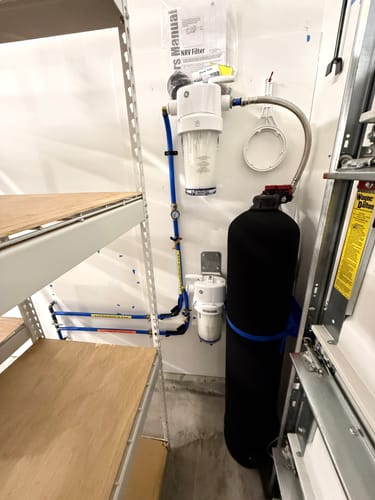
Like any major household purchase, I didn't jump into buying a water softener without doing my homework. I spent weeks researching different technologies, reading technical specifications, and trying to understand the various approaches to treating hard water.
Initially, I considered salt-free water conditioners, thinking they might be a lower-maintenance option. However, after diving into the science, I learned that true water softening requires ion exchange – a process where hardness minerals are physically removed from the water rather than just altered or conditioned.
The SoftPro ECO caught my attention for several specific reasons that aligned with my household's needs.
First, the capacity specifications matched our usage perfectly. With four family members and typical daily water consumption around 240 gallons, the ECO's grain capacity meant regeneration cycles would occur approximately every 5-6 days – frequent enough to maintain consistent soft water but not so often as to waste salt and water during backwashing.
The construction quality impressed me during my research phase. The resin tank uses high-grade materials designed to withstand the pressure cycling that occurs during regeneration. Unlike some budget models that use thin-walled tanks, the SoftPro ECO's tank specifications indicated it could handle decades of operation without structural concerns.
I also appreciated the control valve technology. The ECO uses a demand-initiated regeneration system rather than a simple timer-based approach. This means it monitors actual water usage and only regenerates when necessary, leading to significant savings in salt consumption and water waste over time.
Cost comparison sealed the deal. Three local water treatment companies provided quotes ranging from $2,400 to $3,100 for comparable capacity systems, including installation. The SoftPro ECO, even factoring in my time for DIY installation, came in at roughly 30% of those prices while offering similar or superior specifications.
The availability of clear installation resources, including online video guides, convinced me that this was a project I could handle myself with basic plumbing knowledge and common tools.
Delivery, Unboxing, and Initial Impressions
My SoftPro ECO arrived exactly when promised via freight delivery. The packaging immediately impressed me – this wasn't thrown together hastily. The main resin tank was secured in custom-fitted foam, and all smaller components were organized in clearly labeled boxes.
The first thing I noticed when examining the main tank was its substantial weight and solid construction. At approximately 85 pounds empty, this felt like a piece of equipment built for long-term reliability, not a disposable appliance. The tank's exterior finish had a professional appearance that wouldn't look out of place in a mechanical room.

Opening the component boxes revealed attention to detail I hadn't expected.
Every fitting, bypass valve, and connection piece was individually wrapped and labeled. The installation manual was printed on high-quality paper with clear diagrams and step-by-step photos. Most importantly, the parts list matched exactly what was included – no missing components or substitutions.
I particularly appreciated the quality of the bypass valve assembly. This component allows you to isolate the softener for maintenance while maintaining water service to your home. The SoftPro valve felt substantial and operated smoothly, unlike some cheaper alternatives I'd seen that seemed flimsy or prone to leaking.
The control head – the "brain" of the system that manages regeneration timing and water flow – appeared well-built with clearly labeled connections and a user-friendly digital display. Even before installation, I could tell this wasn't a generic component but something engineered specifically for this application.
One detail that stood out was the inclusion of installation hardware sized for common residential plumbing configurations. Rather than forcing you to make multiple hardware store trips, SoftPro included the most commonly needed fittings and adapters.
Installation Experience: Easier Than Expected

I'll be honest – I approached the installation with some trepidation. While I'm comfortable with basic home improvement projects, plumbing work always makes me nervous due to the potential for expensive water damage if something goes wrong.
However, the SoftPro ECO installation proved much more straightforward than I anticipated. The entire process, from cutting into my main water line to achieving soft water, took approximately 2.5 hours spread across a Saturday morning.
The installation location required some planning.
I chose a spot in our basement near the main water line entry point, ensuring adequate space for the bypass valve operation and future maintenance access. The system requires a drain connection for backwash water and a standard electrical outlet for the control head power supply.
Cutting into the main water line was the most anxiety-inducing step, but the instructions provided clear guidance on pipe sizing and connection methods. I used copper fittings with the existing 3/4-inch main line, and the bypass valve integrated seamlessly. The threaded connections all sealed properly on the first attempt using the included pipe thread compound.
The drain line connection was simpler than expected. I tied into an existing utility sink drain using a simple saddle valve connection that took less than 15 minutes to complete. The system only requires gravity drainage, so no pump or special fittings were necessary.
Programming the control head walked me through a logical sequence of questions about water hardness, household size, and preference settings. I used a water test kit to determine our incoming hardness level (14 grains per gallon), and the system automatically calculated optimal regeneration timing based on our family size and usage patterns.
The first regeneration cycle began immediately after programming completion, allowing me to verify all connections were leak-free under the higher pressures and flow rates that occur during backwashing. Everything performed flawlessly.
Performance Results: Measurable Improvements Across the Board
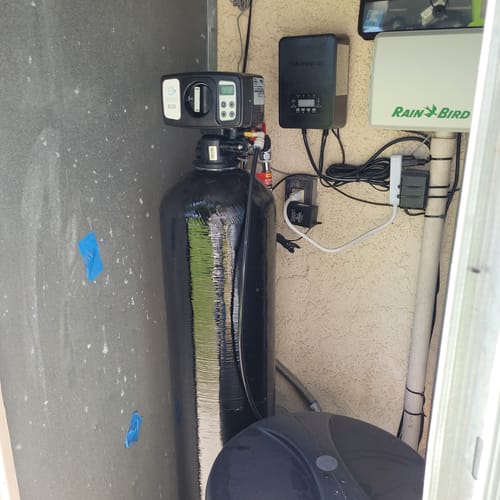
The transformation in water quality became apparent within 24 hours of installation, but the full scope of improvements revealed itself over the following weeks as I tested various aspects of our home's water system.
Water hardness testing showed dramatic results.
Using the same test kit I'd used to measure incoming water hardness, post-softener levels consistently read zero grains per gallon. This represents complete removal of calcium and magnesium ions – exactly what ion exchange technology promises to deliver.
The dishwasher results were immediately obvious. Glassware emerged spotless without any manual drying or special treatments. More importantly, I could see that existing mineral deposits on the dishwasher's interior surfaces were gradually dissolving away as soft water worked to reverse months of scale buildup.
Coffee quality improved noticeably within three days. The brewing time returned to normal as mineral deposits cleared from internal components, and the taste became cleaner and more consistent with what I expected from my chosen beans. I anticipate this will significantly extend the coffee maker's lifespan.
Soap and detergent efficiency increased dramatically. I reduced laundry detergent usage by approximately 40% while achieving better cleaning results. Bar soap in our showers now produces rich, creamy lather instead of the thin, sticky film that hard water creates when mixed with soap.
My wife noticed immediate improvements in hair texture and skin feel. The "squeaky clean" sensation that hard water creates – which I'd always thought was good – was actually soap residue that couldn't rinse away properly. With soft water, everything rinses completely clean.
I measured the regeneration frequency over the first month and found it averaged every 5.2 days, closely matching the system's calculated predictions based on our household size and water usage patterns. Each regeneration cycle consumed approximately 6 pounds of salt and ran for about 90 minutes during early morning hours when household water demand is minimal.
Daily Living Impact and Unexpected Benefits
Beyond the technical performance metrics, the SoftPro ECO has delivered quality-of-life improvements I hadn't fully anticipated when making the purchase decision.
Cleaning time throughout the house has decreased noticeably. Bathroom fixtures stay cleaner longer because soap scum formation requires the interaction between soap and hard water minerals. Shower doors that previously required weekly scrubbing with specialized cleaners now need only a quick wipe-down during regular cleaning.
Our water heater efficiency has improved measurably.
I monitored our natural gas usage before and after installation and observed approximately 8% reduction in consumption during the first full month with soft water. This occurs because mineral scale on heating elements acts as insulation, forcing the system to work harder to achieve target temperatures.
Laundry results exceeded my expectations. Whites stayed brighter, colors remained more vibrant, and fabric texture improved dramatically. Towels regained their original softness without requiring fabric softener additives. I estimate we're saving $15-20 monthly on various cleaning products and detergents due to increased efficiency.
An unexpected benefit appeared in our ice maker performance. The automatic ice maker in our refrigerator had been producing cloudy, poor-tasting ice that we rarely used. With soft water, the ice became crystal clear and neutral-tasting, encouraging our family to drink more water and use less bottled beverages.
Guests have commented on the water quality without prompting. Several friends mentioned that our water "tastes better" and that showering felt more luxurious. These unsolicited observations confirmed that the improvements weren't just psychological or wishful thinking on my part.
Plant watering became more effective. Houseplants that had struggled with our hard tap water showed improved growth and healthier foliage after switching to soft water for watering. The absence of mineral buildup in soil appears to allow better nutrient absorption.
Operating Costs and Long-Term Value Analysis
Understanding the true cost of ownership was crucial for me, so I've tracked expenses carefully since installation to provide realistic expectations for potential buyers.
Salt consumption averages 36 pounds monthly for our household of four with moderate water usage. Purchasing salt in 40-pound bags at approximately $6 each means monthly salt costs run about $5.40. I buy salt quarterly to take advantage of bulk pricing and storage convenience.
Electricity consumption for the control head and regeneration pump is minimal.
The system draws power only during regeneration cycles and for the digital display. Based on my calculations using local utility rates, electrical costs amount to less than $2 monthly – essentially negligible compared to other household appliances.
Water consumption during regeneration cycles uses approximately 45 gallons every 5-6 days for backwashing and rinsing. At our local water rates, this adds roughly $8 monthly to our utility bill. However, this cost is partially offset by reduced water heater energy consumption due to improved efficiency.
Maintenance requirements have proven minimal during my ownership period. The resin bed should maintain effectiveness for 10-15 years under normal conditions, and the control valve carries a 7-year manufacturer warranty. I perform monthly visual inspections and salt level checks, which take about 5 minutes total.
Calculating return on investment, the system pays for itself through reduced soap and detergent consumption, improved appliance lifespan, and water heater efficiency gains in approximately 18-24 months. Every year afterward represents pure savings compared to dealing with hard water problems.
Comparing ongoing costs to the quotes I received for professional installation and service contracts, I'm saving approximately $400 annually by maintaining the system myself – a simple process that requires no special tools or technical expertise.
Honest Assessment: What Could Be Better
After six months of ownership, I can provide a balanced perspective that includes areas where the SoftPro ECO could be improved or situations where potential buyers should consider alternatives.
The salt storage requires regular attention. With our consumption rate, I need to add salt every 3-4 weeks to maintain optimal brine levels. While this isn't difficult, it does require planning ahead to avoid running empty. A larger brine tank would reduce maintenance frequency but would also increase the system's footprint.
The regeneration process, while quiet, isn't completely silent.
During backwash cycles, you can hear water flowing through the system if you're in the same room. This occurs during programmed hours (typically 2-4 AM), so it rarely disturbs anyone, but light sleepers with systems installed near bedrooms should consider this factor.
Installation space requirements are more substantial than I initially anticipated. While the system itself is compact, you need adequate clearance around the bypass valve for future maintenance and enough height above the tank for salt loading. Measure carefully if you're considering installation in tight spaces.
The digital display, while functional, feels somewhat basic compared to smart home technology standards. It provides necessary information clearly, but lacks remote monitoring capabilities or smartphone connectivity that some newer systems offer. For a tech-forward household, this might feel limiting.
Water pressure during peak usage can show slight reduction. With multiple fixtures running simultaneously, I've noticed modest pressure drops compared to the bypass mode. It's not severe enough to affect daily use, but power showers during peak morning routines aren't quite as forceful.
Salt quality matters more than I expected. Using lower-grade salt with impurities can affect system performance and require more frequent cleaning cycles. Premium salt costs slightly more but maintains system efficiency and reduces long-term maintenance requirements.